
Travel Channel’s immensely popular Dead Files returns for Season 12 on Thursday, February 20, 2020.
07 Friday Feb 2020
Posted in Dead Files, Travel Channel, TV Reviews
≈ Comments Off on Dead Files Returns Feb. 20th
Travel Channel’s immensely popular Dead Files returns for Season 12 on Thursday, February 20, 2020.
07 Friday Feb 2020
Posted in Historic Places, History, Real Estate
≈ Comments Off on For Sale: Lebold Mansion

Looking to own a bit of Abilene (KS) history? The circa 1880 Lebold Mansion is for sale. Listed at $429,069, the house boasts 23 rooms. Banker C.H. Lebold assembled the Bicknell Company of Chicago kit house at a cost of $18,000. The home has had several owners and boarded several dozen more. It’s now owned by the Dickinson County Bank after it was auctioned off in a Sheriff’s sale in 2019. The home has had two extensive renovations; one by Fred and Merle Vansholtz in 1975 and the other in 2010 by Gary Yuschalk and Larkin Mayo. The home is one of 8 architectural wonders in Kansas.
The house is one of the original buildings in Abilene. Timothy Hersey and his family settled in the region in 1858. Hersey constructed a dugout for a home, which is still visible in the basement of the tower. Conrad H. Lebold struggled with financial problems and sold the house to Otis Nelson, who was living in the home by 1887. W.W. Burrell and his family moved into the Victorian mansion in 1888. George Sterl would own and live in the house for 30 years. His estate sold the home to Cleyson L. Brown. Brown never lived in the home. Instead, he turned it into a boarding house for his single female telephone operators. In the 30s, he converted the home into the Children’s Home, an orphanage that housed upwards of 30 children at one time.
The home was sectioned off in the 40s by Jesse Hoover and rooms rented out as apartments. Kathy and Kurt Kessinger purchased the home in the early 70s. In 1975, the Vahsholtz’s purchased the home. Mrs. Vahsholtz restored the home—spending $118,000 to renovate—and gave daily tours until her death in 1999. The home was the subject of the 1997 book, Mansion of Dreams, co-authored by Merle’s son Bob and Carolyn McKinney. Her daughter, Ruth, moved in briefly; however, the family decided to sell the home and listed it for $685,000.
Yuschalk and Mayo discovered the home online and relocated from San Francisco to open a museum. They sold the home in 2010.
The home has several unique architectural features. It sits upon a former mine. Original parquet floors were restored, and a Pennsylvania Dutch-themed ceiling painting was saved. It is the perfect home for someone looking for a classic Victorian home.
There aren’t any reports of the home being haunted; however, the home played host to Halloween events. For more information, view https://www.zillow.com/homedetails/106-N-Vine-St-Abilene-KS-67410/91120914_zpid/
03 Monday Feb 2020
Posted in Artists, Artwork, Memory Jugs
≈ Comments Off on Nellie Mae Rowe’s Memory Head
Tags
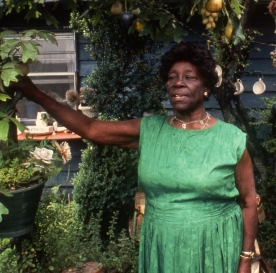

The High Museum of Art (high.org) exhibits the artwork of Nellie Mae Rowe (1900-1982), an American self-taught artist from Georgia. One of ten children, Nellie fled the cotton fields to marry Ben Wheat. They relocated from Fayette County, Georgia to the Vinings, a small town located just outside Atlanta’s city limits. Nellie became a widow for the first time at the age of 36. She married the older widower, Henry “Buddy” Rowe. They built a 2-room cottage at 2041 Paces Ferry Road. Nellie became a widow for the 2nd time in 1948 at the age of 48. Nellie devoted the rest of her life creating art. One of her most remarkable pieces is Two-Faced Head (1980), a sculpture she created when she was close to death.
Memory jugs are funerary objects. Essentially, they memorialize the dead. Most are found in America. Although the origins is unclear, a growing number of experts believe the tradition came out of Central Africa. They are made with an ailing person’s hair and the like. They may also be adorned with items representing the person. Nellie’s father was a former slave who worked his own farm. Her mother was an accomplished quilter. Both would have passed on their African traditions to Nellie and her siblings.
After Buddy died, Nellie was able to turn her home into her studio. She named it the “Playhouse.” Here she made dolls, created yard art, and taught herself how to draw. She adorned her front yard with stuffed animals and art. Symbolism fills her works; Nellie was deeply religious.
Shortly after Nellie was diagnosed with skin cancer, she began Two-Faced Head (1980). She affixed gum she chewed to build the face. She added rhinestones, pearls, and ribbons. She poured herself into the piece, intending it to live on once she died.
Nellie realized fame before she died; her first solo exhibition was in 1978. She is recognized as one of the most influential self-taught artists in America.
Watch a short film: https://www.youtube.com/watch?v=pTPIf2jUTjc
23 Thursday Jan 2020
Posted in Psychics
≈ Comments Off on The Power of Intuition’s Laura Day

The Power of Intuition’s Laura Day
Bestselling author Laura Day offers daily advice to strengthening one’s intuition. My favorite is to surround yourself with like-minded people and let them form your community. She teaches the power of following your gut and listening to your inner voice. She is the subject of a profile essay in Forbes, https://www.forbes.com/sites/wendysachs/2020/01/19/psychic-capital-laura-day-has-made-millions-with-her-superpower-and-wants-to-teach-you-how/#1dc64ad92383.
Here are 5 things to know about Laura Day:
Read more about Laura Day by clicking on the link above.
22 Wednesday Jan 2020
Posted in Cold Brew Calls, Paranormal Study, Paranormal Suspense, Podcasts
≈ Comments Off on Cold Brew Calls
I spent an hour chatting about paranormal phenomena, teaching English Composition, and how my life may be coming full circle. I hope you enjoy the podcast!

Listen: Episode 5 with Lesia Schnur
05 Sunday Jan 2020
Posted by The Haunted Librarian | Filed under ParaScammers
≈ Comments Off on Para-Scammer Alert
05 Sunday Jan 2020
Posted in Hoaxes, In the News, Psychics, R.I.P.
≈ Comments Off on British Spiritual Medium Derek Acorah Dead at 69
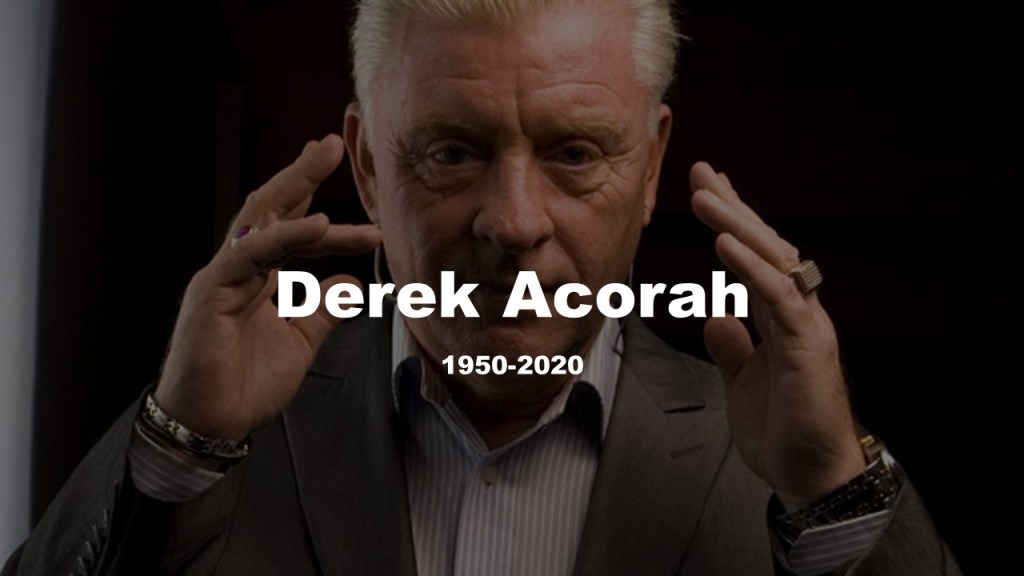
Early today, Derek Acorah’s wife Gwen posted a tribute on FaceBook stating her husband was dead. Born Derek Francis Jason Johnson in 1950, Acorah died after entering a septic coma caused by contracting pneumonia. His death closes a chapter on one of Britain’s controversial psychics.
Nearly 20 years ago, Acorah began using his psychic gifts for entertainment purposes. In 2001, he landed the role of lead medium in a new TV show titled Haunting Truths. The show’s name was changed to Most Haunted the following year. Acorah appeared for 6 series. He was ousted after claims of fakery emerged from some crew members. The members fed Acorah “facts” about some purported spirits. Two were named “Rik Eedles” and “Kreed Kafer.” The names were anagrams for Derek Lies and Derek Faker. Acoroh was swiftly removed from the show.
In the past year, Acorah faced new allegations of deception by contacting families of recently deceased people claiming to be able to speak with the decedents. This violated advertising standards.
Not withstanding the above, Acoroh will probably be remembered as hosting one of the worst TV shows in recent history. In 2009, Acoroh live broadcasted Michael Jackson: The Live Séance, where he attempted to make contact with MJ’s spirit. According to media outlets, it was a car crash of epic proportions in bad taste.
Acorah is survived by his second wife, Gwen, and their two children.
20 Friday Dec 2019
Posted in Famous People, Folk Tales, Folktales, Holidays
≈ Comments Off on Krampus, the Christmastime Monster


Krampus, the Christmastime Monster*
Stories of the dark half-goat, half-demon monster terrorizing unruly children pre-dates Christianity. Its roots come from Central-European folklore with the exact specifics unknown. His name is derived from either Dutch krampen, meaning “pick” or “iron,” or the Austrian “pickaxe.” Some rely on the German translation of “cramp.” Krampus is a Christmastime monster.
The consensus is that the story of Krampus was a pagan morality tale appropriated by Christians. The cautionary tale of Krampus lives on today as a warning to all children contemplating bad behavior, for their “reward” will be living in the underworld (i.e., Hell) for one full year where they will be tortured or possibly eaten. The punishment is severe enough to whip young children into their best behavior.
Krampus Night, or Krampusnacht, begins on December 5th. The saltier companion of Joly Saint Nicholas comes above-ground seeking devilish children. His beverage of choice is Schnapps (a fruity Brandy), go figure, as he swats at misbehaving children with gold painted birch branches.
The unfavorable kidnapping tale alarmed communities in the mid-1900s; therefore, towns were encouraged to tone it down or outright ban such celebrations. However, popularity rose again when the film industry started cranking out Krampus and Krampus-like movies. The 2015 movie Krampus was filmed on a $15 million-dollar budget and grossed over $61 million worldwide. Krampus sells.
While Krampus is NOT the anti-Santa Claus, he is the dispenser of bad news (no presents for you) and discipline. Although the tales mention his eating children, no purported cannibalistic rituals involving Krampus and children have been reported. Maybe the threat of visit was all that was needed.
Merry Christmas and Happy Holidays! And…be on your best behavior.
Blog originally published in December 2018.
20 Friday Dec 2019
18 Wednesday Dec 2019
Posted in Famous Locations, Florida, Florida Mysteries, Hauntings, Historic Places, Not Haunted
≈ Comments Off on St. Petersburg’s Comfort Station No. 1


A story is making the Internet rounds claiming that Comfort Station No. 1 in downtown St. Petersburg, Florida is haunted. It’s not. However, its lack of ghosts should not detract from the stunning architecture that makes it one of the most beautiful and historic public restrooms in the United States.
St. Petersburg experienced large tourism in the 1920s. Hotel construction rose as people came to enjoy the warm winter weather. Architects drew inspiration from Europe building such historic hotels as The Hotel Cordova (1921), the Don CeSar Hotel (1928), and the Vinoy Park Hotel (1925). Shortly after designing the Vinoy, architect Henry L. Taylor (1884-1958) designed Comfort Station No. 1.
At the corner of 2nd Avenue and Bayshore Drive North sits an 8-sided brick building. Topped with Spanish tiles, the octagonal structure is modeled after the Lombardy Romanesque style. Although this is not Taylor’s most important architectural feat, it is one of his most debated.
Bids were taken in March 1927, with permits and construction commencing by the summer. It reportedly cost $16,000 and was completed and operational by May 10, 1928 when a Lost and Found ad ran in the St. Petersburg Times. Ironically, the person who ran the ad found a Masonic ring at the station. The February 1929 issue of The American City praised the facility—both functionally and aesthetically.
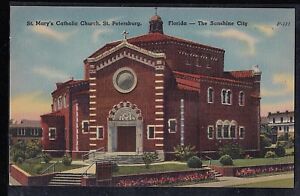
Urban legends continue to swirl. The first claimed that Taylor built the facility to resemble St. Mary Our Lady of Grace Catholic Church, situated at 515 4th Street South. Both structures are octagonal and share similar features. The story further claims that Taylor took umbrage to being shorted on the church project and designed the restrooms as an insult. This is factually incorrect. The bathroom was designed and built before the church, where construction began in 1929. Several newspaper articles, namely the September 9, 1992 St. Petersburg Times article, dispels this rumor.
Comfort Station No. 1 is sometimes called “Little St. Mary’s” or “St. Mary’s Comfort Station.” These are tributes to the similarities between the restroom and the church. While Taylor left no indication as to his reasoning on the design, some postulate that the restroom was a prototype for the large Byzantine style church.
One online tale also claims that Taylor himself haunts the station. Hardly. He built larger, more glamourous buildings to spend eternity.
Another Internet story refers to an elderly woman named “Agnes” who chats ladies up at the sink. After hours searching several online databases, I was unable to find an elderly woman who was alive in the 1930s (she reportedly was wearing clothes of that period) who died around the pier. Using a preconceived old-fashioned name doesn’t make the story true.
The comfort station sits along the retaining wall at the entrance to Pier Approach Park. Over the decades, the park consisted of several large piers: The Railroad Pier (1889); The Pier Pavilion (1895); The Electric Pier (1906); The Million Dollar Pier (1926); and The Inverted Pyramid Pier (1973). Engineers grew concerned by the saltwater erosion on the pilings; therefore, the pier is undergoing another rebuild/renovation.
There are numerous reasons why people hear sounds in the comfort station. First of all: it’s an oversized bathroom. The water lapping against the seawall also creates sounds. Hide tide, low tide; they all make waves. Boats entering/leaving the yacht basin. Acoustics against the tiles. Wildlife hovering about or scurrying underneath. In addition, fog and mist are frequent weather occurrences. Not one tale references actual investigations conducted to debunk.
Historic and old buildings are not necessarily haunted. I’ve visited this location numerous times (I used to live 16 blocks from here and would walk to the park). Never did I have an experience. Further, never did I hear about experiences. Visit Comfort Station No. 1 and reflect on a time when motorists did not have public conveniences and the one progressive city that took up matters by erecting a classic pit stop.

 The Haunted Librarian
You must be logged in to post a comment.